

The Motorbike Diaries: How to Stay Calm Riding a Motorbike in Vietnam’s Traffic Chaos
This article may contain affiliate links where I make a small commission for purchases you make from links that you click from this article. By purchasing through these links, you support me at no additional cost to you. Thanks for your support.
No matter how hard I try, I just can’t do it. I lose the mental battle every time. I tell myself to be calm, patient, understanding—but then it happens: BEEP. BEEP. BEEEEEP. After the third honk in less than ten seconds, I can’t be mentally strong any longer. My Western instincts flare up, and I feel my blood pressure rise.
I’m reminded, once again, that riding a motorbike in Vietnam isn’t just about balance and throttle control—it’s about cultural adaptation. The horn isn’t a weapon here; it’s a language. But for someone raised in the U.S., where honking means “You idiot!” or “Move it!”, this constant noise can feel like an assault.
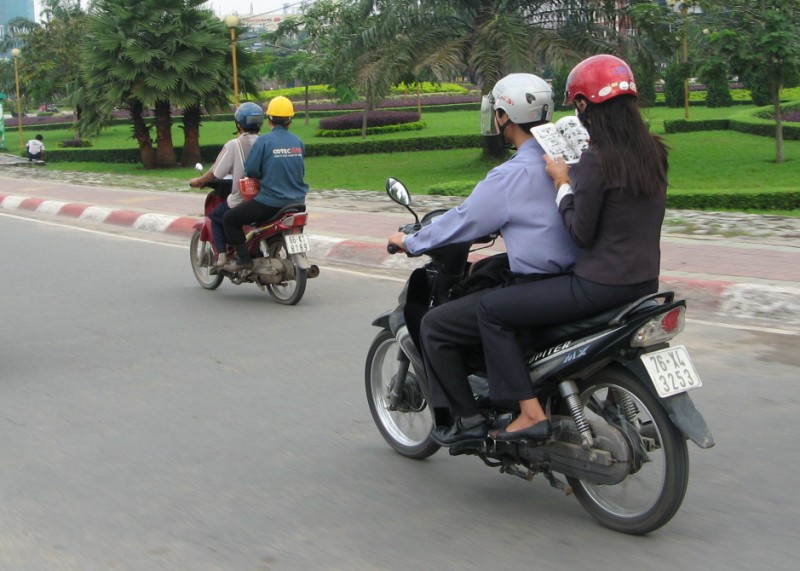
Table of Contents
What Honking Really Means in Vietnam
One of the strangest and most fascinating things about living abroad is realizing just how deeply your home culture shapes you.
In the U.S., we like our space. We value order, rules, and personal bubbles. We think sidewalks are for walking on and pedestrian safety, breakfast should be sweet, and horns are for emergencies—or moments of pure road rage. A honk is the sound of confrontation.
But in Vietnam, horns are simply a form of communication. They’re used to say:
- “Hey, I’m here on your right.”
- “I’m passing you, please don’t move suddenly.”
- “Good morning! Just letting you know I exist.”
It’s polite, even friendly. The sound means presence, not aggression.
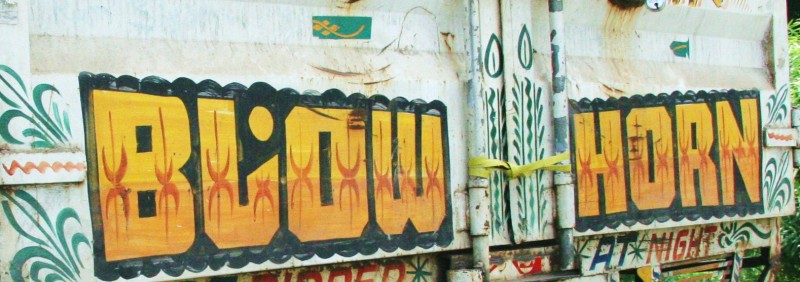
Horns are the Language of the Road in Vietnam
I haven’t been able to grasp the Vietnamese language, but maybe I can grasp the language of the road.
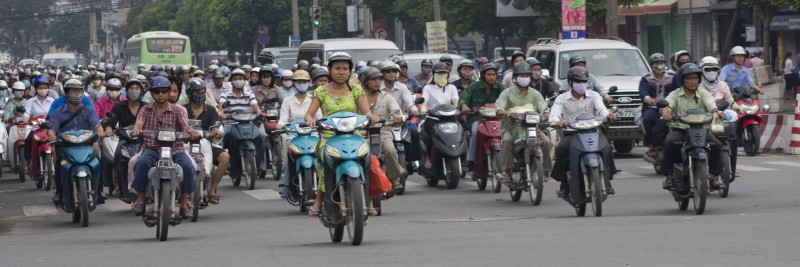
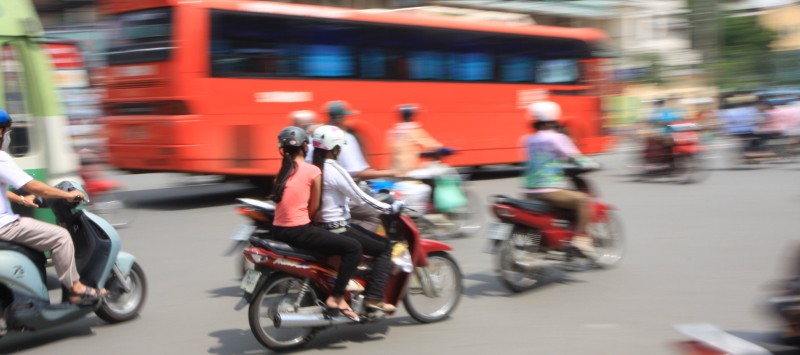
Yesterday, during my commute through Ho Chi Minh City, I found myself on a one-way road shared by cars, buses, and about five million motorbikes. The unwritten rule: cars and buses stick to the left lane, and motorbikes to the right. It’s a system that actually works—until someone decides the rules are optional.
That someone was in a white Mercedes.
The driver slid into the motorbike lane behind me, honking rhythmically—three short, chirpy beeps. He wasn’t angry. He was announcing himself, politely asking for some room. But my American brain didn’t hear politeness; I heard, “MOVE, YOU IDIOT!”
I tried to stay calm. “He’s not yelling at you, Sherry,” I told myself. “He’s just speaking the language of the road.”
I failed.
By the fifth honk, I could feel the familiar surge of irritation. My internal monologue turned sarcastic: Oh sure, you’re just politely blasting your way through a sea of motorbikes in your luxury car. How thoughtful.

Mounting Frustration
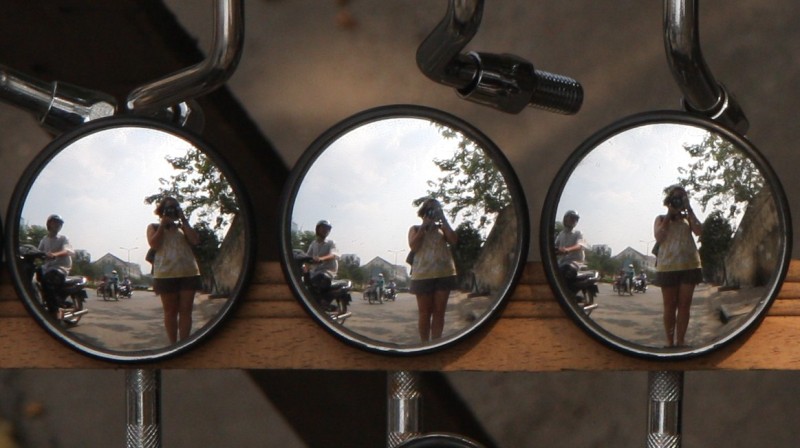
The honking continued as he was right behind me now. I looked in my mirror again and became upset that he was in my motorbike lane for no reason other than to get to his destination faster, as the left-hand ‘car lane’ was moving slowly. However, I told myself to remain calm; I was doing nothing wrong, I was driving along in my lane, being beeped at. No other motorbike seemed to be moving out of the way much; the drivers had tuned out the horn noise and kept on going.
I tried to tune out the horn noise by thinking of the incessant horn as if I were being serenaded nicely. Even though I had decided that I wasn’t going to make an effort to move for this car, I still wanted to try to see the horn as someone giving me a pleasant reminder and not someone yelling at me. I spoke to myself – “Find your inner Asian – Calm, calm, calm.”

The horn continued. My mental wall eventually crumbled, and the American culture started invading my brain as the honking continued and continued. I was mad; I wanted to turn around and scream “Fuck you!” at the car. I imagined doing just that.
But I refrained. I let the anger roll around in my brain for a bit and didn’t allow it to come out of my mouth.
Finding My Inner Calm (or Trying To)
The truth is, no one else around me even flinched at the noise. Locals continued to glide through the traffic, unbothered. They had long ago tuned out the horns, accepting them as part of the city’s heartbeat.
Meanwhile, I was narrating my own mental meltdown:
“Stay calm. Be zen. You’re in Vietnam now. The horn is not personal. Calm, calm, calm.”
The honking continued. My resolve cracked. I didn’t yell, but I wanted to. My Western programming was screaming to respond—to defend my lane, my space, my dignity.
But I didn’t. I let the frustration roll around quietly, and when I finally parked my bike, I realized: maybe I didn’t lose after all.
Adapting to Vietnam’s Motorbike Culture
That’s the thing about living in another culture — it’s not just about learning new habits; it’s about unlearning your old ones. Letting go of the way you were taught to see the world. This is exactly why I wanted to try living abroad.
In Vietnam, I’m constantly reminded that sometimes to fit in, you have to release what feels natural. You have to surrender control, trust the flow, and stop fighting it. It’s like being in a school of fish — everyone moves together, no one panics, and somehow it all works out.
Maybe that’s the real lesson in this chaotic, honking symphony: not every sound is an attack. Not every beep is a threat. Sometimes it’s just the rhythm of a different culture — and my job is to learn how to dance to it.
And while I may not have mastered the art of staying calm at every honk, I did manage not to scream, not to gesture, and not to let my frustration spill out.
So maybe, just maybe, I haven’t lost the battle after all.

Tips for Motorbike Riding in Vietnam
If you’re planning to join the dance of Vietnam’s streets, here are a few lessons from experience:
- Relearn what a horn means. It’s communication, not confrontation.
- Don’t rely on mirrors or blinkers. Eyes forward, peripheral vision strong.
- Stay predictable. Smooth movements are key — sudden turns can cause chaos.
- Embrace the flow. Think like a fish in the current. Trust the movement of the group.
- Breathe. You can’t fight the noise, but you can control your reaction to it.
The Road to Letting Go
As I rode home that day, still buzzing with adrenaline and annoyance, I realized that my real battle wasn’t with the Mercedes driver or the honking—it was with myself.
Living in Vietnam keeps teaching me that cultural adjustment isn’t a single breakthrough moment. It’s a daily act of surrender. It’s learning to hear a horn and smile instead of snapping. It’s realizing that sometimes the chaos isn’t chaos at all—it’s just a different kind of order.
And tomorrow morning, when I hear that first BEEP, I’ll try again.
Read all of the Motorbike Diaries articles






I know what you mean. It does get easier though, and using the horn yourself helps get into the swing of it. Not that I need the horn much now with Dao’s raucous exhaust note 🙂
The worst I’ve seen is in India. Honking doesn’t bother me too much, I mostly drown it out. Think of it like birds chirping, except you can chirp back (and often too!)
Oh man, if/when I make it over there I know that’s going to drive me insane. I felt my blood boil several times in Hanoi getting beeped at. I would have a hard time not stopping the bike and jumping on the hood of the car. Haha. You did good!
I think this is the best encapsulation of the East vs West (or First vs Third World) cultural divide I’ve ever seen! 🙂 It’s true, the incessant horn-tapping is totally anathema to our notions of civility in the States. Patience, grasshopper, I predict you’ll get your Zen on eventually.
@Anil – that’s very zen of you…I hope I can get that kind of ‘mind control’ eventually!!
@Iain – yes – can hear you coming from a ways away! Your little bike sounds very intimidating!
When I moved to Toronto from Mumbai, a friend told me that his car’s honk was not working since two years. I innocently asked him – “Then how do you drive?” 🙂 haha